The Travel Bag That Is Packed for the Wrong Trip
Pack a travel bag for the trip you’re actually taking: match each item to a real need, remove duplicate gear, and keep useful essentials easy to reach.
The common mistake with a travel bag is packing for every problem you can imagine instead of the trip on your calendar. The cost is a heavier, harder-to-manage bag and a jumble of items that crowd out what you will actually reach for. A useful travel bag starts with the journey’s specific demands, then earns space for each item.
Think of your bag like a small kitchen drawer: a tool belongs there if it has a distinct job, not simply because it might come in handy someday. Build and check the contents over the week before departure. That gives you time to notice gaps without turning packing into an exercise in collecting gear.
What does this trip ask your bag to do?
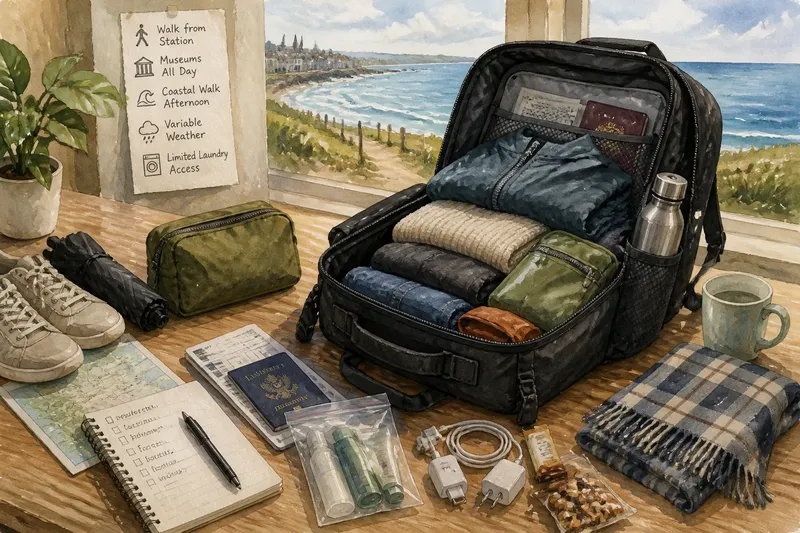
Start with the itinerary, not a generic packing list. Write down the conditions that affect what you carry: how you will get to your lodging, what you plan to do, what the weather is likely to require, and whether you will have access to laundry or basic supplies.
Make the needs concrete. “Stay comfortable” is too vague to guide a choice; “walk from the station to the hotel with the bag on my back” points toward manageable weight and a secure water bottle. “Be ready for rain” might call for a compact shell, while a bulky umbrella may make more sense if you expect repeated outdoor stops and have room to carry it.
Separate firm needs from imagined contingencies. A charging cable for your phone has a clear job if you rely on it for tickets and directions. A second cable, a backup battery, and a wall adapter with extra ports may overlap, depending on your devices and how long you will be away from an outlet.
How should you build the bag during the week?
Seven days out: define the trip’s demands
Check the itinerary and lodging details. Note the expected activities, likely conditions, transport between stops, and any bag-size or storage limits that apply to your route. Put the facts in a short list, leaving out what you cannot reasonably plan around.
Then assign each need a function: carry documents, keep a device charged, protect clothing from rain, or make a long walk more comfortable. This keeps shopping out of the first stage. If two needs can be met by one item you already own, record that rather than adding another object to the list.
Five days out: choose one item for each job
Pull possible items from your closet and place them beside the bag. For each one, say what it does and when you expect to use it. If its purpose sounds like “just in case” but has no connection to the itinerary, set it aside for now.
Look closely at duplicates. A phone, tablet, and e-reader may each be useful on a particular trip, but bringing all three makes sense only if each has a distinct role. Likewise, several small pouches can turn organization into extra bulk if they hold the same kind of loose essentials.
Three days out: remove overlaps and test access
Pack the selected items, then check whether one already covers another’s job. A light scarf might serve as a layer on a cool ride and a cover-up at a planned stop; that can make a separate accessory unnecessary. Keep any item that has a real second use, but do not invent one to justify carrying it.
Place the items you will need during transit where you can reach them without unpacking everything. Keep documents, a charging cable, and a snack together only if that arrangement suits how you travel. The goal is not a special system; it is being able to find the things your route calls for.
The night before: pack for the actual departure
Check the forecast and the latest itinerary, then adjust only where the information changes a real need. Put aside anything added solely because packing feels unfinished. Close the bag and lift it; if its contents make your planned walk or transfer awkward, revisit the least useful items first.
Leave room for the ordinary things you may acquire or use along the way, such as a damp layer or a small purchase. A bag packed to the seams is harder to close and makes it less convenient to reach what is already inside.
Which items earn space in a travel bag?
Use this short decision list while choosing what to pack:
- Does it solve a named trip need? Keep it if you can connect it to a specific activity, condition, or part of the route.
- Is there already an item doing the same job? Compare the two and choose the one that fits your plans better.
- Will you be able to use it when needed? Consider whether it will be accessible, compatible with your other gear, and practical to carry.
- Can one item serve two genuine purposes? Prefer it when both uses are plausible and it does not make either job harder.
- Does the bag still suit how you will move? Reconsider contents that make a planned walk, station transfer, or overhead storage awkward.
- Is this contingency relevant to your route? Keep preparations tied to realistic conditions rather than a long list of remote possibilities.
Use the product label, manufacturer instructions, and any carrier rules to resolve questions about materials, device compatibility, or baggage limits. If a required item is unclear, check the relevant source before you decide what to leave behind.
What should you do when the itinerary changes?
Say you have planned a city stay with a short walk from the station and a full day in museums, then learn that one afternoon now includes a coastal walk. The original bag has comfortable city shoes but no suitable layer for the exposed route. Recheck that day’s conditions, swap in an appropriate outer layer, and remove a duplicate entertainment device if space is tight; the observable result should be a bag that fits the revised plan without carrying the old extras by default.
When plans shift, change the bag only for the new demand. A different lodging arrangement may affect access to laundry or a place to charge devices; a changed activity may call for footwear or weather protection. Remove the item whose job has disappeared instead of simply adding to the load.
Which packing questions are worth settling?
Should you pack an extra outfit?
Decide based on the activities, clothing needs, and laundry access you expect. An extra layer or a change of clothes can have a clear role, but packing several alternatives for the same situation may leave little room for items you will use each day.
Do travel-size toiletries save useful space?
They can suit a short trip or a bag with limited room, while familiar full-size products may be more practical when you need them for longer. Choose the amount that fits the planned stay, and check any applicable liquid or baggage rules before leaving.
How many charging accessories belong in the bag?
Start with the devices you will bring and identify what each one needs to charge. Pack compatible cables and adapters for those devices, then remove accessories that have no distinct use on the route or at your lodging.
What if you are unsure whether an item is worth carrying?
Ask when and where you expect to use it, then compare that moment with the space and effort it takes to bring. If you cannot name a likely use tied to the trip, leave it out unless it is required for a specific personal need.
How can you keep the travel bag useful until departure?
Revisit your travel bag when a real detail changes, not whenever you think of another possible item. Use the itinerary, lodging information, and current conditions to make the decision. For a straightforward check, match every packed object to one trip need and set aside anything that merely repeats another job.
Before you leave, keep the essentials you need on the journey within easy reach and make sure the bag remains comfortable to carry the way your plans require. The best-packed bag is not the one with a solution for every imaginable inconvenience; it is the one whose contents make sense for the trip you are about to take.